U.S. and Mexican rescue teams are searching for 11 people who are still missing after a boat carrying 27 people capsized in the Pacific Ocean off Baja California, Mexico. Sixteen Mexican nationals were rescued from the water on Friday, several of whom were reported to have been seriously injured by shark attacks.
The U.S. Coast Guard received a distress call for help around 1 a.m. local time on Friday. The boat sank about 140 miles (225 kilometers) west of the Mexican city of Ensenada, according to reports, prompting a multinational search and rescue operation involving the U.S. Coast Guard, the U.S. Navy and the Mexican Navy.
While 16 survivors were safely evacuated, the search for the remaining passengers was ongoing as of Sunday. Authorities have not yet confirmed the cause of the capsizing, its intended destination or whether it was linked to suspected migrant smuggling.
Table of Contents
ToggleBoat capsizes near Baja California: What happened?
Survivors told authorities that 27 people were aboard the boat when it capsized in the Pacific Ocean. The incident occurred in waters west of the coastal city of Ensenada in the Mexican state of Baja California.
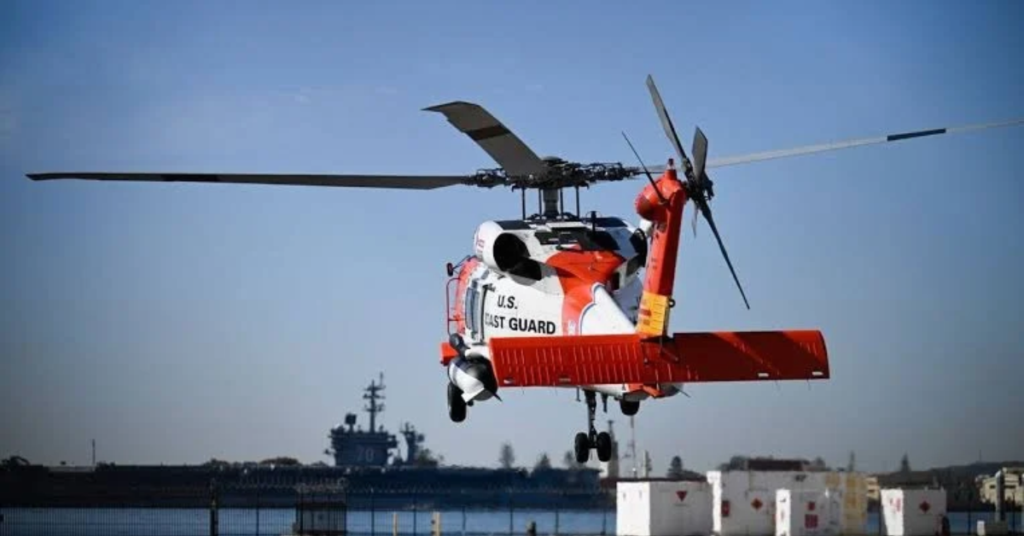
The U.S. Coast Guard began the rescue operation shortly after midnight after receiving a distress call. A rescue helicopter arrived in the area about two hours later.
The rescue team spent about 90 minutes pulling 16 survivors from the water. Coast Guard Lieutenant Santiago Tamburini said rescue swimmers and helicopter crews found people clinging to each other and holding onto floating objects to stay afloat.
With 11 people missing in the incident, authorities are continuing to search the surrounding waters.
The exact circumstances of the capsizing are still under investigation. Authorities have not confirmed where the boat left from or its intended destination.
The survivors are suspected to have suffered injuries caused by shark bites.
One of the most concerning aspects of the rescue operation is the condition of many of the survivors. They reportedly suffered serious injuries from the shark attack.
Coast Guard personnel administered emergency first aid to the survivors as they were being transported to San Diego, California.
Three of the survivors were taken to Scripps Mercy Hospital in San Diego, according to hospital spokeswoman Janice Collins. One was treated for a suspected shark attack, while the other two were treated for cold-related issues.
Three other survivors were evaluated at Scripps Memorial Hospital in La Jolla and released.
Authorities have not yet determined the circumstances surrounding the injuries. It is not clear what species of shark was involved or whether the injuries occurred before or after the ship capsized.
These injuries highlight the dangers faced by people stranded in open water, where cold, fatigue, waves and limited availability of emergency medical care can quickly become life-threatening.
A search operation is underway led by the US Coast Guard and the Mexican Navy.
Several aircraft and ships from U.S. and Mexican maritime agencies are involved in the search for the 11 missing passengers.
The U.S. Coast Guard deployed resources from Air Station Ventura, Air Station Sacramento and the Coast Guard Cutter Active. The USS Kingsville and a helicopter attached to Helicopter Sea Combat Squadron 23 also joined the mission.
An additional helicopter was deployed to help search the surrounding waters for signs of the missing passengers.
Rescuers have found floating debris and seats that are believed to be related to the capsized vessel. According to Lt. Tamburini, these items could help investigators determine the type of boat involved.
However, as of Sunday, the Coast Guard had not found the actual vessel.
The search operation presents significant challenges, as the missing people are likely to have drifted far from the original location of the capsized vessel. Ocean currents, weather conditions, visibility and the time since the incident can all complicate maritime searches.
Although the incident occurred outside US territorial waters, the Coast Guard said it had deployed its resources to assist where possible.
Was the capsized boat involved in migrant smuggling?
Authorities are investigating whether the vessel was traveling through a maritime route linked to migrant smuggling between Mexico and the United States.
The area west of Baja California is used by smugglers, and is also frequented by fishing boats and recreational boats. Authorities have not yet determined whether the capsized vessel was carrying migrants as part of an illegal operation or was being used for some other purpose.
The Mexican Embassy in San Diego confirmed that all 16 of the rescued people were Mexican citizens.
U.S. Customs and Border Protection is interviewing survivors as part of its investigation. Their information could help authorities determine the boat’s origin, destination, ownership and purpose.
Coast Guard Capt. Robert Tucker, commander of the San Diego Sector, highlighted the serious dangers associated with the dangerous maritime journey. They also cited the large number of people aboard the ship and its location on a route commonly associated with illegal maritime smuggling activities as factors.
Investigators have not confirmed the intended destination of the boat or the circumstances under which the passengers boarded the boat.
If survivors are identified as witnesses to a crime, they may be eligible for humanitarian parole under applicable U.S. immigration procedures. Such eligibility is not automatic and depends on the circumstances and relevant legal requirements.
Why is the Pacific passage near Baja California dangerous?
The waters off Baja California connect Mexico’s Pacific coast to parts of Southern California. The region is home to commercial fishing, recreational boating, and other maritime activities, but it has also been linked to dangerous attempts to smuggle migrants across the sea.
Small or overcrowded boats can be particularly vulnerable in open sea conditions. If a boat capsizes, passengers can be exposed to cold water, waves, dehydration, fatigue, and drowning.
Unlike nearshore travel, reaching incidents far out at sea can take a long time, as rescue teams have to travel great distances. Even after receiving a distress call, if a boat has capsized or people have become separated, it can be difficult to find survivors.
Crowding can also reduce the stability of a boat, depending on the design of the boat, the arrangement of passengers, and sea conditions. However, investigators have not yet determined whether crowding caused the boat to capsize or what specific environmental factor caused it to capsize.
The current incident illustrates why maritime safety measures, appropriate vessels, emergency communication equipment, and the availability of life-saving equipment are essential for everyone traveling at sea.
Previous fatal maritime accidents near the US-Mexico border
This latest boat capsizing follows other deadly maritime incidents involving boats traveling near the U.S.-Mexico border.
In May 2025, at least three people died when a boat capsized approximately 35 miles north of the U.S.-Mexico border.
Another major incident occurred in March 2023, when two suspected smuggling boats approached the San Diego coast in thick fog, killing eight people. One of the boats capsized in the waves, making it one of the deadliest maritime smuggling accidents ever recorded off the U.S. coast.
These incidents illustrate the potentially deadly consequences of dangerous maritime travel. They also highlight the challenges faced by emergency responders trying to find and rescue people in difficult sea conditions.
While the circumstances of each incident are different, crowding, boat safety, weather, and timely availability of rescue can be important factors in a maritime emergency.
Latest information: 11 people are still missing
As of Sunday, the search for 11 people missing after the Baja California capsized was ongoing. The U.S. Coast Guard reported that no other survivors had been found at that time.
Sixteen people had been rescued, and several were receiving medical treatment for injuries caused by shark bites or exposure to the cold.
The U.S. Coast Guard, U.S. Navy and Mexican Navy were coordinating their search efforts. Investigators were interviewing survivors to learn what happened before the boat sank.
Authorities have not yet determined the cause of the boat’s capsize, its intended destination or whether the trip was related to migrant smuggling.
Further information will depend on the results of the ongoing search and information gathered during the investigation.
Frequently Asked Questions
1. How many people are missing after the boat capsized off Baja California?
Eleven people were reported missing after a boat carrying 27 people capsized in the Pacific Ocean. Sixteen Mexican nationals were rescued.
2. Where did the boat capsize?
The vessel reportedly capsized approximately 140 miles (225 kilometers) west of Ensenada, in Mexico’s Baja California region.
3. Why were some survivors treated for shark bites?
Several survivors had injuries described as consistent with shark bites. However, authorities have not confirmed the exact cause of the injuries or identified any shark species involved.
4. Which agencies are searching for the missing passengers?
The search operation involves the U.S. Coast Guard, U.S. Navy, and Mexican Navy, using aircraft and vessels to search the surrounding waters.
5. Was the boat carrying migrants to the United States?
Authorities are investigating the vessel’s purpose. Although the area is associated with maritime smuggling, officials have not confirmed whether this particular boat was involved in an illegal migrant transport operation.
6. Have all the survivors received medical attention?
Several survivors were transported to hospitals in the San Diego area. Three were taken to Scripps Mercy Hospital San Diego, while three others were evaluated at Scripps Memorial Hospital La Jolla and later discharged, according to the information available.
7. What is the latest status of the rescue operation?
As of Sunday, 11 people remained missing, and no additional people had been found, according to the Coast Guard information cited in the original report.
Conclusion
A major cross-border rescue operation has been launched after a boat capsized off Baja California. Eleven people remain missing after 16 passengers were pulled from the Pacific Ocean. As authorities search and investigate, the incident has highlighted the serious dangers of dangerous sea travel and the importance of maritime safety and coordinated emergency response.