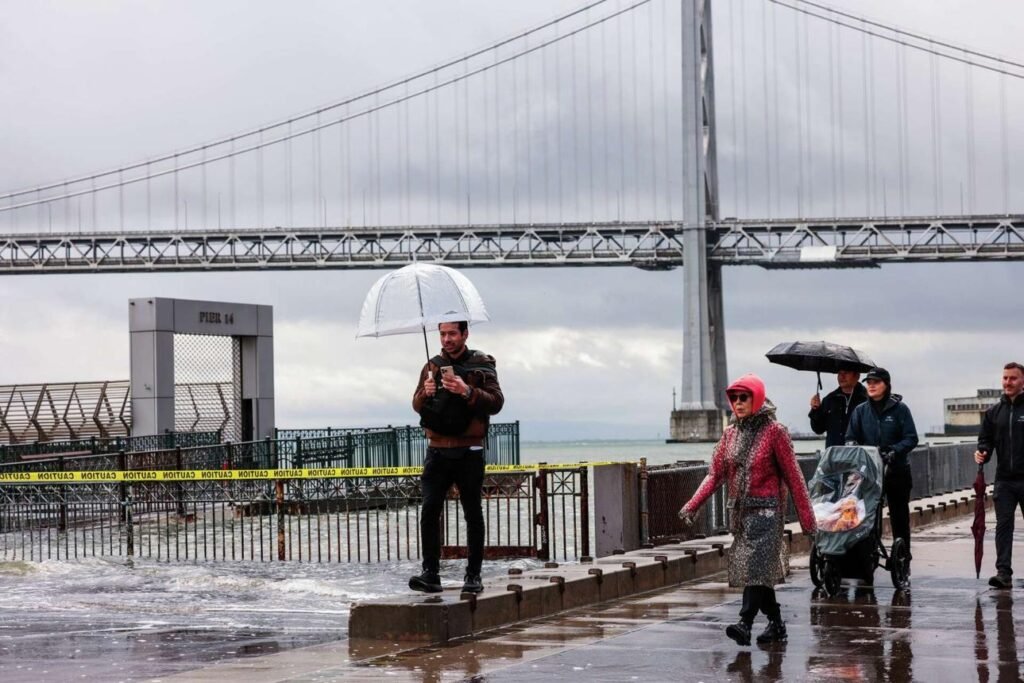
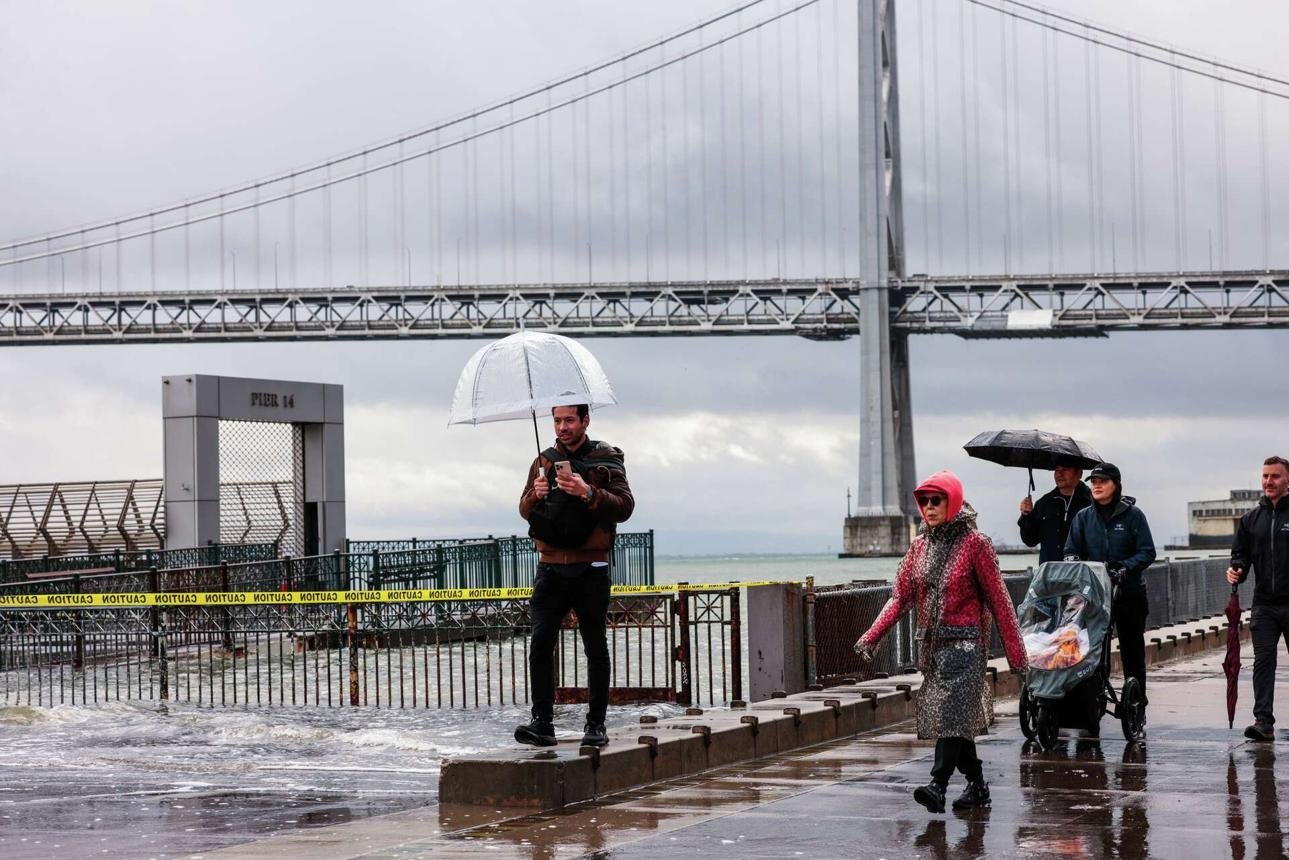
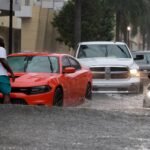
California is dealing with a powerful weather system as an atmospheric river hits California, bringing intense rainfall, strong winds, flooding concerns and heavy snow to higher elevations. The storm has created difficult conditions across the San Francisco Bay Area, with floodwaters affecting waterfront areas, including San Francisco’s Embarcadero.
The powerful storm is disrupting daily life, affecting roads, transportation, coastal communities and travel routes. While the rainfall is providing much-needed water for the state’s dry season, the intensity of the downpours is creating immediate concerns about flooding, dangerous road conditions and potential damage to infrastructure.
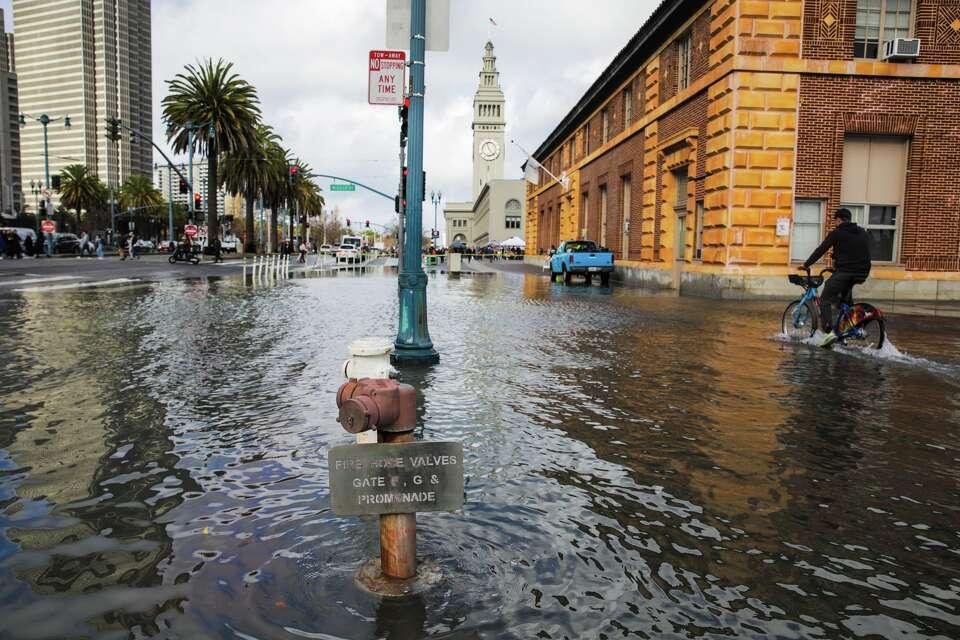
Table of Contents
ToggleAtmospheric River Hits California With Intense Rain and Strong Winds
The latest atmospheric river is carrying a significant amount of moisture toward California from the Pacific Ocean. When this moisture-rich weather system reaches land, it can release enormous amounts of rain over a relatively short period, sometimes overwhelming drainage systems and causing rapid flooding.
The San Francisco Bay Area has been among the areas experiencing significant impacts. Heavy rainfall, powerful wind gusts and bands of intense showers have affected communities across the region. Streets have flooded, trees have fallen, and some transportation services have experienced interruptions.
San Francisco recorded unusually heavy rainfall during the storm, with downtown rainfall totals reaching record levels for November 18. The combination of intense precipitation and strong winds has made conditions particularly challenging for pedestrians, motorists and residents living in low-lying areas.
Flooding Along San Francisco’s Embarcadero
One of the most visible impacts of the storm has been flooding along San Francisco’s waterfront. Parts of the Embarcadero, including areas near Pier 14, experienced flooding as heavy rain and rising water affected waterfront streets and pedestrian areas.
The Embarcadero is a popular destination for tourists, cyclists, commuters and local residents. It runs alongside San Francisco Bay and includes waterfront attractions, public spaces, piers and transportation routes. Flooding in this area can disrupt traffic, make walkways unsafe and affect nearby businesses.
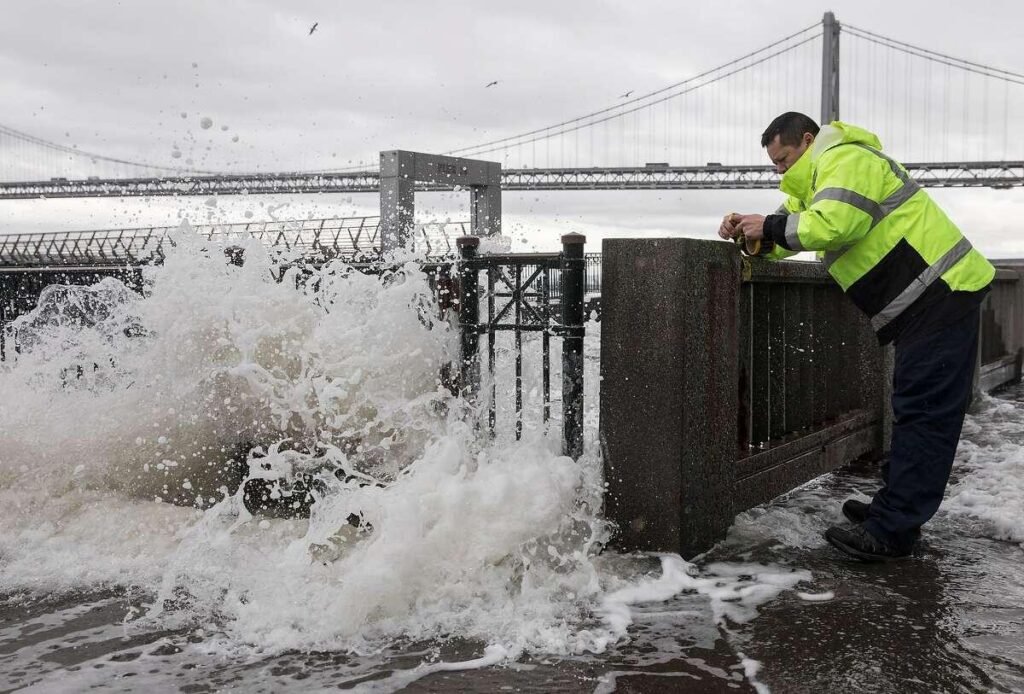
Heavy rainfall is not the only factor contributing to waterfront flooding. High tides, waves and water pushing toward the shoreline can make it harder for rainwater to drain into the bay. When storm drains become overwhelmed or water levels are elevated, standing water can accumulate on streets and low-lying surfaces.
People visiting the waterfront should avoid flooded areas, stay away from seawalls during rough conditions and follow instructions from local authorities.
What Is an Atmospheric River and Why Is It Dangerous?
An atmospheric river is a long, narrow corridor of concentrated water vapor moving through the atmosphere. These weather systems can transport huge amounts of moisture across the Pacific Ocean toward the West Coast of the United States.
When an atmospheric river encounters California’s coastal mountains and inland terrain, the air is forced upward. As it rises and cools, moisture condenses and produces rain or snow, depending on the temperature and elevation.
Atmospheric rivers are not always destructive. They can replenish reservoirs, improve water supplies and help reduce drought conditions. However, particularly strong atmospheric rivers can bring excessive rainfall, dangerous flooding, landslides and damaging winds.
The risk becomes greater when rainfall falls rapidly over a short period or when several rounds of precipitation arrive before the ground has time to absorb additional water.
Heavy Mountain Snowfall Threatens Sierra Nevada Travel
While lower elevations are dealing with rain and flooding, California’s mountainous regions are facing heavy snowfall.
The Sierra Nevada is expected to receive substantial snow at higher elevations, particularly around the Lake Tahoe region. Snow, strong winds and reduced visibility can create dangerous driving conditions on mountain roads and highways.
Travelers heading toward ski areas or crossing mountain passes should be prepared for rapidly changing weather. Snow-covered roads, icy surfaces, chain restrictions and possible road closures can make journeys significantly longer.
Drivers should check highway conditions before leaving, carry appropriate winter equipment and avoid unnecessary travel during periods of severe weather.
How the Storm Could Affect California Residents
The atmospheric river is creating several potential hazards beyond rainfall itself.
Flash flooding and waterlogged streets
Intense rainfall can overwhelm storm drains and create deep water on streets, intersections and underpasses. Even familiar routes may become unsafe during sudden downpours.
Power outages
Strong winds can bring down trees, branches and power lines. Electricity interruptions may affect homes, businesses and traffic signals.
Landslides and debris flows
Saturated soil can become unstable, increasing the risk of landslides and mudslides, especially on steep slopes and along coastal highways.
Transportation delays
Flooding, fallen trees, high winds and poor visibility can interrupt public transportation, flights, ferry services and road traffic.
Dangerous coastal conditions
Large waves and strong currents can make beaches, piers, rocks and waterfront walkways dangerous. High tides combined with storm conditions may also increase coastal flooding risks.
Is California’s Atmospheric River Storm Helping With Drought?
California regularly experiences dry periods, and winter storms are an important part of replenishing the state’s water resources. Rainfall contributes to reservoirs, groundwater supplies and seasonal runoff, while mountain snow acts as a natural water storage system.
However, heavy rainfall does not automatically solve drought problems.
When rain falls too quickly, it can run off the surface rather than soak into the ground. Flooding can also damage property, infrastructure and ecosystems. The benefits of increased water supply depend on how much precipitation the state receives, where it falls, how much snow accumulates and how water is managed throughout the season.
A balanced winter with steady rainfall and healthy snowpack is generally more beneficial for long-term water management than a few extreme storms separated by long dry periods.
California Weather Outlook: More Rain and Coastal Hazards Possible
The storm’s effects may not end with the first wave of heavy rainfall. Forecasts from the National Weather Service indicate continued weather concerns for parts of the Bay Area, including additional showers, cold conditions, hazardous surf and potential coastal flooding around high tides.
Residents should monitor updated forecasts because atmospheric river systems can shift in intensity and location. Even after the heaviest rain ends, flooded roads, unstable slopes, debris and damaged infrastructure may continue creating hazards.
People planning Thanksgiving travel across California should pay particular attention to weather forecasts, highway updates and possible delays.
Safety Tips During an Atmospheric River
If you are in an area affected by heavy rain or flooding, consider the following precautions:
Avoid driving through flooded roads, even if the water appears shallow.
Stay away from creeks, drainage channels and rapidly flowing water.
Keep clear of fallen trees and electrical wires.
Avoid beaches, piers and exposed waterfront areas during high surf.
Check local weather alerts before traveling.
Prepare flashlights, drinking water, batteries and essential supplies in case of power outages.
Follow evacuation instructions if authorities issue warnings for your area.
Floodwater can conceal potholes, debris, damaged roads and dangerous currents. Walking or driving into flooded areas can put your life at risk.
Frequently Asked Questions
What is happening in California right now?
California is being affected by a powerful atmospheric river bringing heavy rain, strong winds, flooding risks and mountain snow. The San Francisco Bay Area has experienced significant rainfall and flooding, including along the Embarcadero.
Why is San Francisco’s Embarcadero flooding?
Heavy rainfall, elevated water levels, high tides and waves can combine to create flooding along low-lying waterfront areas. Water may also drain more slowly when storm drains are overwhelmed or bay water levels are elevated.
What is an atmospheric river?
An atmospheric river is a concentrated stream of moisture in the atmosphere that transports water vapor over long distances. When it reaches land and interacts with weather systems and terrain, it can produce heavy rain or snow.
Is it safe to travel during an atmospheric river?
Travel can be hazardous during an atmospheric river because of flooded roads, strong winds, poor visibility, landslides and snow at higher elevations. Travelers should check official road and weather updates before departing.
Will the storm help California’s water supply?
The rain and mountain snow may help replenish water resources, but the overall benefit depends on where precipitation falls, how much snow accumulates and how efficiently water can be stored. Extreme rainfall can also cause damaging runoff and flooding.
Final Thoughts
The atmospheric river hitting California is a reminder of how quickly Pacific weather systems can transform conditions across the state. From flooded waterfront streets in San Francisco to snow-covered mountain highways, the storm is creating different challenges for communities depending on their location and elevation.
Although rain and snow can provide valuable water resources, safety remains the immediate priority. Residents and travelers should stay informed, avoid flooded areas and prepare for changing weather conditions as the storm continues to affect California.

1 thought on “Atmospheric River Hits California: Heavy Rain, Flooding and Mountain Snow Slam the Bay Area.”