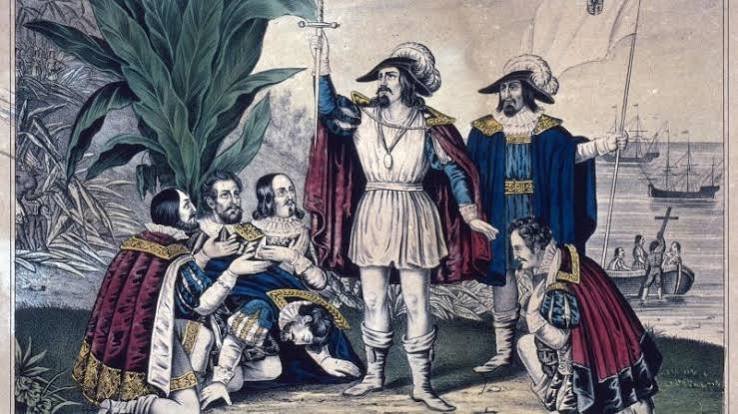
On October 12, 2026, the United States observes Columbus Day as a federal holiday while a growing number of states and municipalities simultaneously recognize Indigenous Peoples’ Day, reflecting a deepening national debate over the legacy of Christopher Columbus and the history of colonization in the Americas.
The second Monday in October has become a focal point for discussions about how the nation remembers its origins. Columbus Day remains one of eleven federal holidays, but over 200 municipalities, 17 states, and the District of Columbia now celebrate or recognize Indigenous Peoples’ Day, according to a Senate resolution introduced in September 2026.
A Holiday Born From Protest
The movement to establish Indigenous Peoples’ Day began decades ago. At a 1977 United Nations conference in Geneva, Indigenous delegates from around the world resolved to observe October 12 as an International Day of Solidarity with the Indigenous Peoples of the Americas.
South Dakota became the first state to officially recognize the day in 1990, calling it Native American Day. In 1992, the city of Berkeley, California, adopted Indigenous Peoples’ Day as a direct protest against the 500th anniversary of Columbus’s arrival.
John Curl, a longtime Berkeley resident and one of the holiday’s founders, recalled the motivation behind the 1992 decision. ‘This was the termination of a 500-year cycle, and we were starting another 500-year cycle, and we wanted to do this one differently,’ Curl said.
Federal recognition came in 2021 when President Joe Biden became the first president to formally acknowledge Indigenous Peoples’ Day alongside Columbus Day. In a proclamation that year, Biden said the day was intended to ‘honor the perseverance and courage of Indigenous peoples, show our gratitude for the myriad contributions they have made to our world, and renew our commitment to respect Tribal sovereignty and self-determination.’
President Donald Trump has taken a different position. In April 2026, he posted on social media, ‘I am hereby reinstating Columbus Day under the same rules, dates and locations, as it has had for all of the many decades before.’ He signed a Columbus Day proclamation at a cabinet meeting and stated, ‘In other words, we’re calling it Columbus Day,’ adding, ‘We’re back, Italians.’
Historical Record and Ongoing Debate
Christopher Columbus, an Italian explorer sailing under the Spanish Crown, completed four voyages across the Atlantic beginning in 1492. His expeditions initiated the permanent European colonization of the Americas and established the transatlantic slave trade.
Historians have long documented the violence and exploitation that followed his arrival. Columbus served as governor of Hispaniola, where Spanish colonizers enslaved and brutalized the Taíno and Arawak populations. His strained relationship with the Spanish Crown led to his arrest and dismissal as governor in 1500.
The Dominican friar Bartolomé de Las Casas published a searing account of Spanish atrocities in 1552 titled ‘A Very Brief Account of the Destruction of the Indies.’ That narrative, written by a contemporary, remains a primary source for the worst abuses of the conquest.
David Weeden, tribal historic preservation officer for the Mashpee Wampanoag Tribe, described what the day means for Native communities. ‘It’s a time to reflect on all that we’ve been through as a people: How much we endured, how much we’ve persevered and how much we still have to continue to fight for—for ourselves, for generations before us and for generations that will come after us,’ Weeden said.
Kitcki Carroll, an enrolled citizen of the Cheyenne and Arapaho Tribes of Oklahoma, said the day offers an opportunity to tell a different story about the United States. ‘The United States has evolved over time become the most powerful and wealthy nation the world has ever known,’ Carroll said. ‘It has Indian Country to thank for that.’
Observances Across the Country
This year, government offices, schools, and institutions in various states are marking October 12 in different ways.
North Carolina Governor Josh Stein issued a proclamation designating October 12, 2026, as Indigenous Peoples’ Day in the state. The St. Louis Park City Council in Minnesota signed a proclamation observing the day, noting that Minnesota is home to 11 federally recognized tribes.
In Michigan, Governor Gretchen Whitmer issued a proclamation in 2025 declaring the state would observe Indigenous Peoples’ Day, though no such proclamation has been released in 2026. Detroit has formally recognized the day since 2018.
Events across the Midwest include a community celebration at Mid Michigan College in partnership with the Saginaw Chippewa Indian Tribe, a powwow at the Minneapolis American Indian Center, and special programming at the Milwaukee Public Museum.
Federal offices, post offices, and most banks are closed on Monday. The stock market remains open, though bond markets are closed. In South Florida, Miami-Dade County offices and libraries are closed, while Broward County offices remain open. Public schools in Broward and Monroe counties are closed, but Miami-Dade schools are in session.
For many Native communities, the day represents both reflection and continued advocacy. Gino Barichello, a Muscogee Indian whose mother helped found Berkeley’s observance, described the holiday’s growth. ‘When I stop and think about all those years ago, it seemed like the dream,’ Barichello said. ‘Now it’s wonderful to look out across the state, across our country and see it just kind of flourishing.’




1 thought on “Columbus Legacy Divides US as Indigenous Peoples Day Gains Ground Across States and Cities.”